



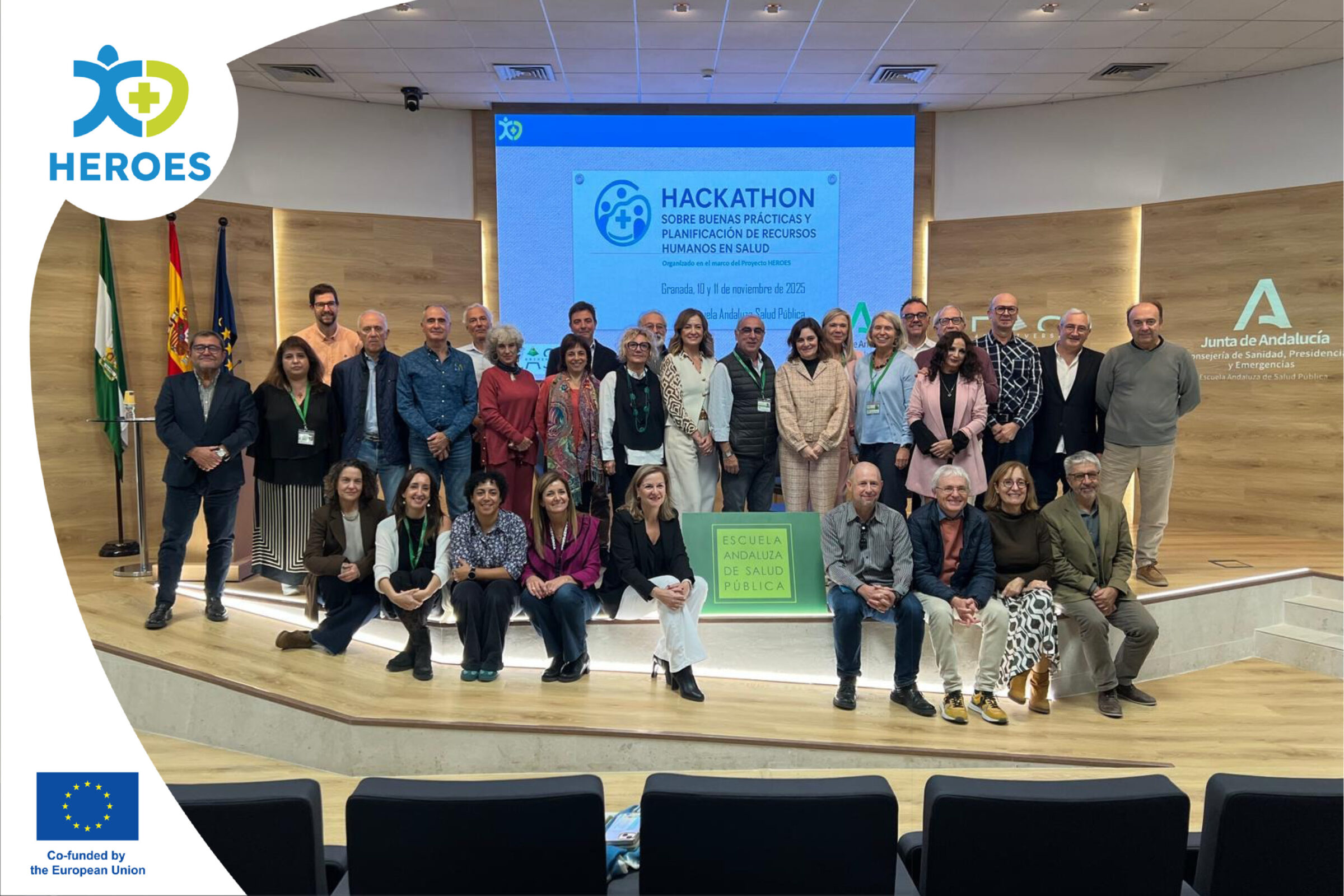
Hackathon JA HEROES in Granada
Two Days of Collaboration to Rethink Healthcare Workforce Planning
On November 10-11, 2025, Granada became the epicenter for a crucial conversation about the future of healthcare in Europe. The city hosted the JA HEROES Hackathon, a dynamic event dedicated to rethinking health workforce planning. Held at the Andalusian School of Public Health (EASP), the hackathon brought together a diverse ecosystem of professionals: from healthcare managers and clinicians to university experts, patient association representatives, tech innovators, and policymakers from across Spain.
This gathering was a practical pillar of the broader European Joint Action JA HEROES, funded by the European Commission. The initiative’s mission is to bolster the capacity of EU and EEA countries to plan their health human resources with a focus on sustainability, accessibility, and resilience. The Granada event served as a hands-on lab to generate innovative ideas that feed directly into the consortium’s work, particularly Work Package 5, focused on improving health planning models.
The event was opened by Celia Gómez, a representative of the Spanish Ministry of Health. She emphasized the critical need to rethink the healthcare profession amidst rapid demographic, technological, and social change. “The sustainability of European health systems hinges on people—on their training, well-being, and adaptability,” she stated, highlighting the necessity for proactive planning, reinforced continuous education, and more collaborative, patient-oriented organizational models. Her message perfectly captured the spirit of JA HEROES: innovating with purpose, learning cross-border, and building shared solutions.
Over two intensive days, participants formed multidisciplinary teams to tackle structural challenges through the design thinking methodology. They focused on three key axes:
- Shared Competencies and Teamwork in Primary Care
- Comprehensive Health Training and Continuous Professional Development
- Telework, Professional Mobility, and Territorial Equity
Guided by the stages of empathize, define, ideate, and prototype, teams blended real-world experience from health services with creative, collaborative dynamics. The result was a portfolio of actionable prototypes and strategic lines directly addressing the present and future needs of healthcare systems.
Key insights and powerful ideas emerged with consensus:
- A Revolution in Training: There is a clear demand to transform health education so that it is better aligned with real clinical practice. , creating a coherent pathway that integrates undergraduate studies, specialized training, and lifelong learning throughout the professional career.
- New Skills for New Realities: Strengthening digital, collaborative, and transversal competencies are key to addressing evolving care models and the emerging demands of the health system.
- Breaking Down Silos: promoting more integrated organizational structures that enhance coordination across care levels and specialties, fostering teamwork with a patient-centered approach.
- Technology as an Equity Tool: Advocating for a responsible and innovative use of technology to improve accessibility and ensure territorial equity, supported by more robust information systems that enable needs forecasting, strategic decision-making, and rigorous health workforce planning.
These contributions will be integrated into the next steps of the JA HEROES project, informing the optimization of models, processes, and governance structures. At the end of the Hackathon, the overall atmosphere was one of motivation and renewed commitment. Beyond the concrete proposals, the event demonstrated the value of bringing together diverse profiles in a shared space to experiment with new ways of working, exchange learning, and build a shared vision for the future of the health workforce in Europe.